
ULTRA TECHNOLOGY

The ULTRA Engineering Philosophy

The ULTRA Engineering Philosophy is built on one principle: a high-performance carbon fiber pool cue shaft is more than the material it is made from. Real performance comes from engineering the entire system—materials, taper, diameter, mass distribution, stiffness, tolerances, and components—to work together.
Read More »

ULTRA Carbon Fiber Construction

ULTRA Carbon Fiber Construction is the foundation of ULTRA’s approach to high-performance pool cue shaft engineering. While carbon fiber offers valuable design possibilities, a shaft’s performance depends on more than its material. Geometry, weight distribution, stiffness, internal structure, manufacturing tolerances, and component integration all influence how a shaft performs on the pool table.

Read More »

ULTRA Material Selection: Engineering a High-Performance Pool Cue Shaft

ULTRA Material Selection is a core part of the engineering philosophy behind ULTRA. A high-performance carbon fiber pool cue shaft is about more than the material itself. Its performance depends on how material composition, shaft geometry, weight distribution, stiffness, manufacturing tolerances, and individual components work together as a complete system.

Read More »

ULTRA Front-End Mass Engineering: Precision in Every Shot

ULTRA Front-End Mass Engineering is a key part of the engineering philosophy behind ULTRA pool cue shafts. A high-performance carbon fiber pool cue shaft is about more than the material itself. Its performance depends on how mass, stiffness, taper, diameter, internal structure, and component interfaces work together to deliver a consistent playing experience.

Read More »

ULTRA Energy Transfer: The Engineering Behind Cue Performance

ULTRA Energy Transfer represents the engineering philosophy behind ULTRA’s approach to high-performance pool cue shafts. While carbon fiber is an advanced material, the material alone does not determine how a shaft performs. Performance depends on how materials, geometry, mass distribution, stiffness, and individual components work together as a complete system.

Read More »

ULTRA Vibration & Feedback: Understanding Cue Shaft Performance

Vibration and feedback are important parts of how a pool cue feels and performs. With a high-performance carbon fiber pool cue shaft, these characteristics depend on more than the material itself. Shaft geometry, mass distribution, stiffness, internal construction, and component quality all influence the player’s experience.

Read More »

ULTRA Quality Control: Precision Behind Every Pool Cue Shaft

ULTRA Quality Control is central to the engineering philosophy behind ULTRA high-performance pool cue shafts. While carbon fiber offers significant design possibilities, the material alone does not determine how a shaft performs. Consistent performance depends on how materials, geometry, stiffness, mass distribution, and individual components are engineered to work together.

Read More »

ULTRA Performance Testing: The Engineering Behind Every Shot

ULTRA Performance Testing is central to understanding how ULTRA approaches high-performance pool cue technology. A carbon fiber pool cue shaft is more than its raw material. Its playing characteristics depend on how materials, shaft geometry, weight distribution, stiffness, and individual components work together.

Read More »

ULTRA Research & Development: Engineering High-Performance Pool Cue Shafts

ULTRA Research & Development focuses on the engineering principles behind high-performance pool cue shafts. While carbon fiber has expanded the possibilities of modern cue technology, the material alone does not determine how a shaft plays. Performance depends on how materials, geometry, weight distribution, stiffness, and individual components work together as a complete system.

Read More »

ATAC

Why Choose the ATAC Playing Shaft?

Choosing the right playing shaft can make a meaningful difference in how you approach every shot. The ULTRA ATAC Playing Shaft is positioned as a high-performance carbon fiber pool cue shaft, with an emphasis on engineered performance, consistency, control, and reliable feedback.

Read More »

ATAC Specifications & Joint Compatibility: A Guide for Pool Players

The ATAC carbon fiber playing shaft is part of ULTRA’s high-performance cue lineup, designed around the demands of accurate shotmaking, consistent cue-ball control, and reliable feedback. Understanding ATAC specifications and joint compatibility helps players evaluate whether the shaft fits their playing style and existing pool cue.

Read More »

BURST

BURST Carbon Fiber Break Shaft: Built for the Break

The break shot sets the tone for every rack. It demands power, control, and repeatability, making shaft design an important part of a player’s break setup. The BURST Carbon Fiber Break Shaft from ULTRA is designed around the demands of the break shot, with a focus on efficient energy delivery, structural stability, and consistent performance.

Read More »

Why Choose the BURST Break Shaft?

The break sets the tone for every rack. Whether you’re playing 8-ball or 9-ball, a controlled, repeatable break can help you spread the balls, create scoring opportunities, and take control of the table. The ULTRA BURST Break Shaft is designed specifically for the demands of the break shot, with a focus on efficient energy transfer, structural stability, and consistent performance.

Read More »

LAUNCH

LANCH Carbon Fiber Jump Shaft: Precision for the Jump Shot

The LANCH Carbon Fiber Jump Shaft is designed around the specialized demands of jump shots in pool. Unlike a standard playing shaft, a jump shaft must support a technique that relies on cue elevation, precise tip contact, controlled power, and efficient energy transfer to lift the cue ball over an obstructing ball.

Read More »

Why Choose the LANCH Jump Shaft? A Guide for Pool Players

Jump shots are an important part of modern pool, allowing players to clear obstructing balls and reach the cue ball’s intended target line. The right equipment can help players develop better control and consistency. The ULTRA LANCH Jump Shaft is designed for this specialized aspect of the game, where shaft response, stiffness, balance, and energy transfer all play a role.

Read More »

LANCH Jump Technology & Response: Built for the Jump Shot

Jump shots demand a different approach to cue design. From controlled cue elevation to precise energy transfer, every element of a jump cue influences how it responds at impact. LANCH Jump Technology & Response explores the engineering priorities behind the LANCH jump shaft in the ULTRA range and what players should consider when evaluating jump performance.

Read More »

LANCH Short vs. Long Jump Shots: Choosing the Right Jump Shaft

LANCH Short vs. Long Jump Shots explores how jump-shaft design supports different situations on the pool table. As part of the ULTRA range, LANCH focuses on the specialized demands of jump shots, where shaft stiffness, responsiveness, cue elevation, tip contact, and controlled energy transfer all influence performance.

Read More »

CARE & MAINTENANCE

How Often Should You Clean a Carbon Fiber Shaft?

Knowing how often to clean a carbon fiber shaft helps you maintain a smooth stroke, consistent feel, and reliable performance at the pool table. Although carbon fiber is durable and dimensionally stable, your shaft still collects chalk dust, hand oils, and other contaminants during regular play.

Read More »

What Should You Use to Clean Carbon Fiber?

Knowing what you should use to clean carbon fiber is essential for maintaining your pool cue shaft’s performance, feel, and longevity. Although carbon fiber is durable and dimensionally stable, proper care helps protect its surface and preserve a consistent stroke.

Read More »

What Should You Never Use on Carbon Fiber Shafts?

A carbon fiber pool cue shaft is engineered for consistent performance, durability, and a smooth stroke. However, improper cleaning products or maintenance methods can damage its surface or affect its playing characteristics. Knowing what you should never use on carbon fiber shafts helps protect your investment and maintain reliable performance at the table.

Read More »

Can You Use Alcohol on a Carbon Fiber Shaft?

If you own a carbon fiber pool cue shaft, proper maintenance is essential for preserving its smooth finish, consistent feel, and long-term performance. But can you use alcohol on a carbon fiber shaft? The answer depends on the shaft’s surface coating and the manufacturer’s care instructions.

Read More »

Can You Sand a Carbon Fiber Pool Cue Shaft?

Can you sand a carbon fiber pool cue shaft? In most cases, sanding is not recommended unless the manufacturer specifically approves it. Unlike traditional maple shafts, carbon fiber pool cue shafts use engineered surface finishes that may be damaged by abrasive materials or improper maintenance.

Read More »

Can Carbon Fiber Cue Shafts Scratch?

Yes, carbon fiber cue shafts can scratch. Although carbon fiber is known for its strength, durability, and dimensional stability, the surface of a carbon fiber pool cue shaft can still develop scratches, scuffs, or cosmetic wear. Proper care helps protect the shaft, maintain a smooth stroke, and preserve consistent playing performance.

Read More »

How to Store a Carbon Fiber Pool Cue Shaft

Proper storage is essential to maintaining the performance, feel, and longevity of a carbon fiber pool cue shaft. Although carbon fiber is known for its strength and dimensional stability, your shaft still needs protection from heat, impacts, contamination, and improper handling.

Read More »

Carbon Fiber Shafts: Temperature & Humidity

Temperature and humidity are important considerations when caring for a high-performance carbon fiber pool cue shaft. Although carbon fiber is known for its durability and dimensional stability, proper storage and routine maintenance help preserve the shaft’s surface, playing consistency, and long-term performance.

Read More »

Traveling With a Carbon Fiber Pool Cue Shaft

Traveling with a carbon fiber pool cue shaft requires proper storage and handling to protect its performance, surface, and precision engineering. Whether you’re heading to a local pool hall, entering a tournament, or traveling with your cue, a few simple precautions can help keep your equipment in playing condition.

Read More »

How to Replace a Tip on a Carbon Fiber Shaft

Replacing a tip on a carbon fiber shaft requires careful preparation and the right materials. Unlike traditional wood shafts, a carbon fiber pool cue shaft may feature a specialized surface finish that needs specific care. Following the correct procedure helps protect the shaft, maintain consistent play, and extend the life of your equipment.

Read More »

Can Any Cue Repair Technician Replace a Carbon Shaft Tip?

Not every cue repair technician has the experience or equipment needed to replace a tip on a carbon fiber pool cue shaft. Although tip replacement is a common part of pool cue maintenance, carbon fiber shafts require careful handling to protect their precision-engineered construction and playing characteristics.

Read More »

How Long Does a Carbon Fiber Cue Shaft Last?

A carbon fiber pool cue shaft is designed for durability, consistent performance, and reliable play. But how long does a carbon fiber cue shaft last? Its lifespan depends on build quality, frequency of use, storage conditions, and proper maintenance. Although carbon fiber is highly durable and dimensionally stable, it still requires care to maintain its playing characteristics over time.

Read More »

How to Inspect a Carbon Fiber Shaft for Damage

Knowing how to inspect a carbon fiber shaft for damage helps pool players protect their equipment, maintain consistent performance, and identify potential problems before they get worse. Although carbon fiber pool cue shafts are designed for durability and stability, they still require proper handling and routine inspection.

Read More »

Caring for the Cue Joint and Pin

Proper care of the cue joint and pin is essential for maintaining the performance, reliability, and longevity of your pool cue. For players using a high-performance carbon fiber pool cue shaft, simple maintenance habits can help protect precision-engineered components and support consistent play.

Read More »

Carbon Fiber Shaft Warranty & Service Guide

A carbon fiber pool cue shaft is engineered for consistent performance, reliable feedback, and long-term durability. Proper care helps protect its surface, maintain playability, and prevent avoidable damage. This Carbon Fiber Shaft Warranty & Service Guide explains how to care for your shaft, what to avoid, and what to consider when seeking service or warranty support for your ULTRA equipment.

Read More »

CARBON FIBER KNOWLEDGE

What Is a Carbon Fiber Pool Cue Shaft?

A carbon fiber pool cue shaft is a high-performance cue component designed to deliver consistent play, controlled cue-ball response, and reliable performance. Unlike traditional wood shafts, carbon fiber shafts use engineered composite materials that give manufacturers greater control over stiffness, weight distribution, and structural design.

Read More »

How Are Carbon Fiber Pool Cue Shafts Made?

Carbon fiber pool cue shafts have changed the way players think about cue performance, consistency, and durability. But how are carbon fiber pool cue shafts made, and what makes their construction different from traditional wood shafts?

Read More »

What Is a Low-Deflection Pool Cue Shaft?

A low-deflection pool cue shaft is designed to reduce cue-ball squirt when striking the cue ball off-center. For players who use sidespin, also known as English, a low-deflection shaft can make aiming more predictable and help improve consistency.

Read More »

What Causes Cue Ball Deflection? Understanding Shaft Technology

Understanding what causes cue ball deflection is essential for players choosing a high-performance pool cue. While carbon fiber technology has expanded the possibilities of cue design, low deflection depends on much more than the material itself.
While modern material choices like carbon fiber have expanded what engineers can control,

Read More »

Carbon Fiber Shaft Deflection Explained

Carbon fiber pool cue shafts have changed the way players think about performance, consistency, and cue technology. But does carbon fiber automatically mean lower deflection? Not necessarily. Understanding how shaft engineering affects cue-ball response can help players make a more informed equipment choice.

Read More »

Does Shaft Diameter Affect Deflection?

Does shaft diameter affect deflection? It’s a common question among pool players choosing a high-performance shaft. While diameter can influence how a cue shaft feels and performs, it is only one part of the equation. Material, construction, weight distribution, and front-end design also play important roles in cue-ball response.

Read More »

Does Shaft Taper Affect Performance?

Does shaft taper affect performance? Absolutely. A pool cue shaft’s taper influences how it feels in your bridge hand, how it moves through your stroke, and how consistently you deliver the cue ball. However, taper is only one part of the equation. Material, stiffness, weight distribution, front-end design, and manufacturing

Read More »

How Shaft Stiffness Affects Your Game

Choosing the right pool cue shaft can influence your feel, accuracy, and consistency at the table. Understanding how shaft stiffness affects your game helps you look beyond material labels and focus on the engineering behind a high-performance carbon fiber pool cue shaft.

Read More »

Carbon Fiber Shaft Durability: What Pool Players Should Know

Carbon fiber shaft durability is an important consideration when choosing a modern pool cue. Carbon fiber technology has expanded the possibilities of cue design, offering manufacturers greater control over stiffness, weight distribution, and consistency. However, the material alone does not determine how a shaft performs or holds up over time.

Read More »

Are All Carbon Fiber Cue Shafts the Same?

Carbon fiber has changed the game for modern pool equipment, offering new possibilities for shaft design, consistency, and performance. But are all carbon fiber cue shafts the same? Absolutely not. While they may share the same base material, their construction and playing characteristics can vary significantly.

Read More »

How Tip Weight Affects Deflection in Pool

Understanding how tip weight affects deflection helps players make informed decisions when choosing a pool cue shaft. While carbon fiber technology has introduced new possibilities in cue design, material alone does not determine performance. The shaft’s front-end mass, construction, stiffness, and overall design all influence how the cue ball reacts

Read More »

Why Manufacturing Tolerances Matter in Carbon Fiber Pool Cue Shafts

Carbon fiber has expanded the possibilities of modern pool cue engineering, offering greater control over shaft design, stiffness, weight distribution, and consistency. But the material alone does not determine performance. Manufacturing tolerances matter because even small variations in a shaft’s geometry, internal structure, or mass distribution can influence how it

Read More »

How Ferrule Design Affects Deflection in Pool Cues

How ferrule design affects deflection is an important topic in modern pool cue engineering. While carbon fiber has opened new possibilities for high-performance shafts, the material alone does not determine how a cue plays. Ferrule design, front-end mass, shaft geometry, stiffness, and tip construction all influence cue-ball response.

Read More »

Why Front-End Mass Matters in a Carbon Fiber Pool Cue Shaft

Front-end mass matters because it influences how a pool cue shaft responds on off-center hits. As carbon fiber pool cue shafts continue to evolve, shaft engineering plays an increasingly important role in deflection, consistency, and overall playing performance. However, carbon fiber alone does not guarantee a better-performing shaft. The complete

Read More »

Radial Consistency in Carbon Fiber Shafts

Radial consistency in carbon fiber shafts is an important consideration in modern pool cue engineering. Carbon fiber has opened new possibilities for designing high-performance pool cue shafts, but the material alone does not determine how a shaft plays. Its construction, weight distribution, stiffness, and manufacturing quality all contribute to its

Read More »

How to Choose the Right Carbon Fiber Shaft

Choosing the right carbon fiber shaft is an important decision for any pool player looking to improve consistency, control, and confidence at the table. While carbon fiber has expanded the possibilities of modern cue technology, the material alone does not determine performance. The shaft’s engineering, construction, and overall design play

Read More »

What Shaft Diameter Should I Choose?

Choosing the right pool cue shaft diameter can influence your bridge feel, cue-ball control, and overall playing experience. With advances in carbon fiber technology, modern pool cue shafts offer greater opportunities for precision engineering. However, diameter alone does not determine performance. The shaft’s construction, taper, stiffness, weight distribution, and tip

Read More »

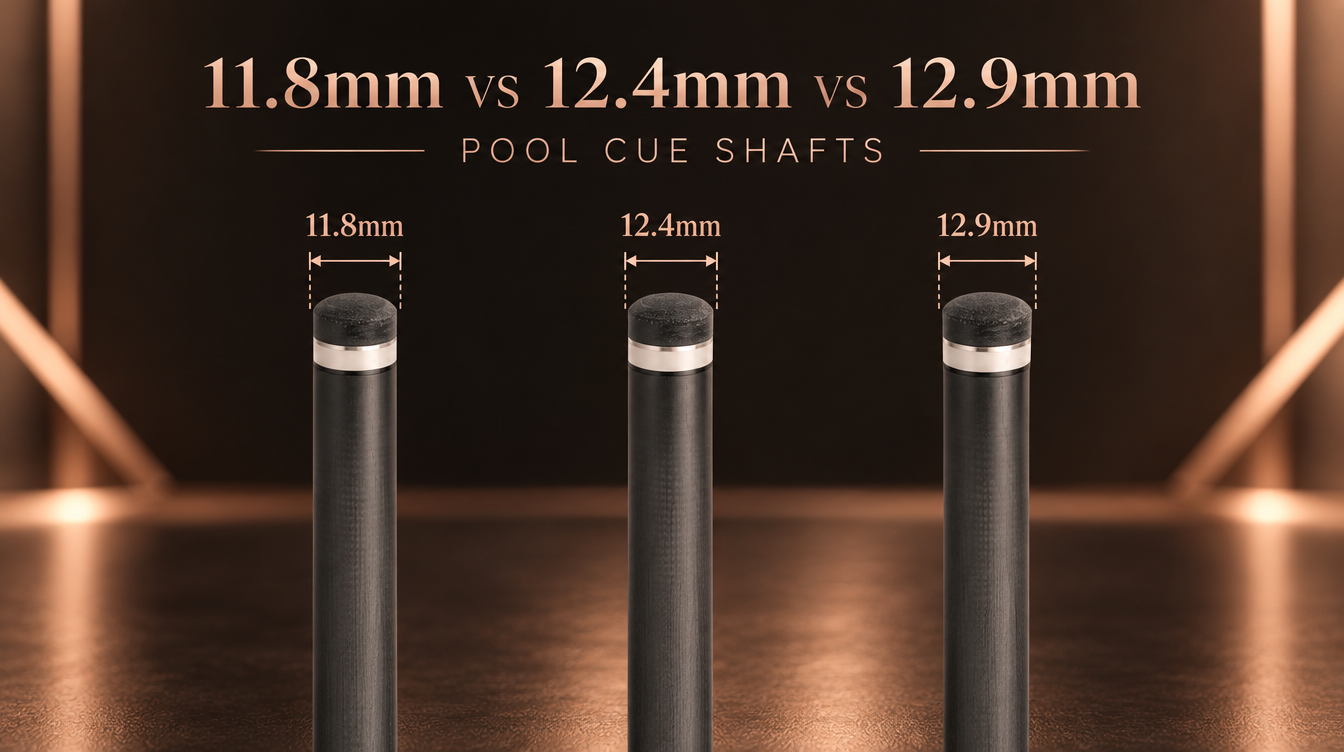
11.8mm vs 12.4mm vs 12.9mm Pool Cue Shafts: What’s the Difference?

Choosing between 11.8mm, 12.4mm, and 12.9mm pool cue shafts involves more than tip diameter. In modern pool, a shaft’s performance depends on its overall engineering, including stiffness, taper, weight distribution, front-end design, and tip system. Carbon fiber technology gives manufacturers greater control over these characteristics, but the material alone does

Read More »

Should Beginners Use Carbon Fiber Shafts?

Should beginners use carbon fiber shafts when choosing their first pool cue? Carbon fiber has become a popular material in modern pool cue technology, offering new possibilities for shaft engineering, consistency, and performance. However, whether a carbon fiber pool cue shaft is the right choice for a beginner depends on

Read More »

Are Carbon Fiber Pool Cue Shafts Worth It?

Are carbon fiber pool cue shafts worth it? For many pool players, the answer depends on how the shaft is engineered, how it plays, and whether its performance matches their playing style. Carbon fiber has expanded the possibilities of modern cue design, but the material alone does not guarantee better

Read More »

mISC